
 HOME >
Truck Camper Electrical Guide: Real Experience from Two Years of Use
 TP06A Truck Topper

Today, from the perspective of someone who has actually lived with a truck camper for two years, I'd like to talk about the electrical questions that everyone asks about. I'll cover the appliances, power, electricity usage, and charging — everything electricity-related on a truck camper — so you can get a comprehensive understanding of how power works in a truck camper.
Appliances
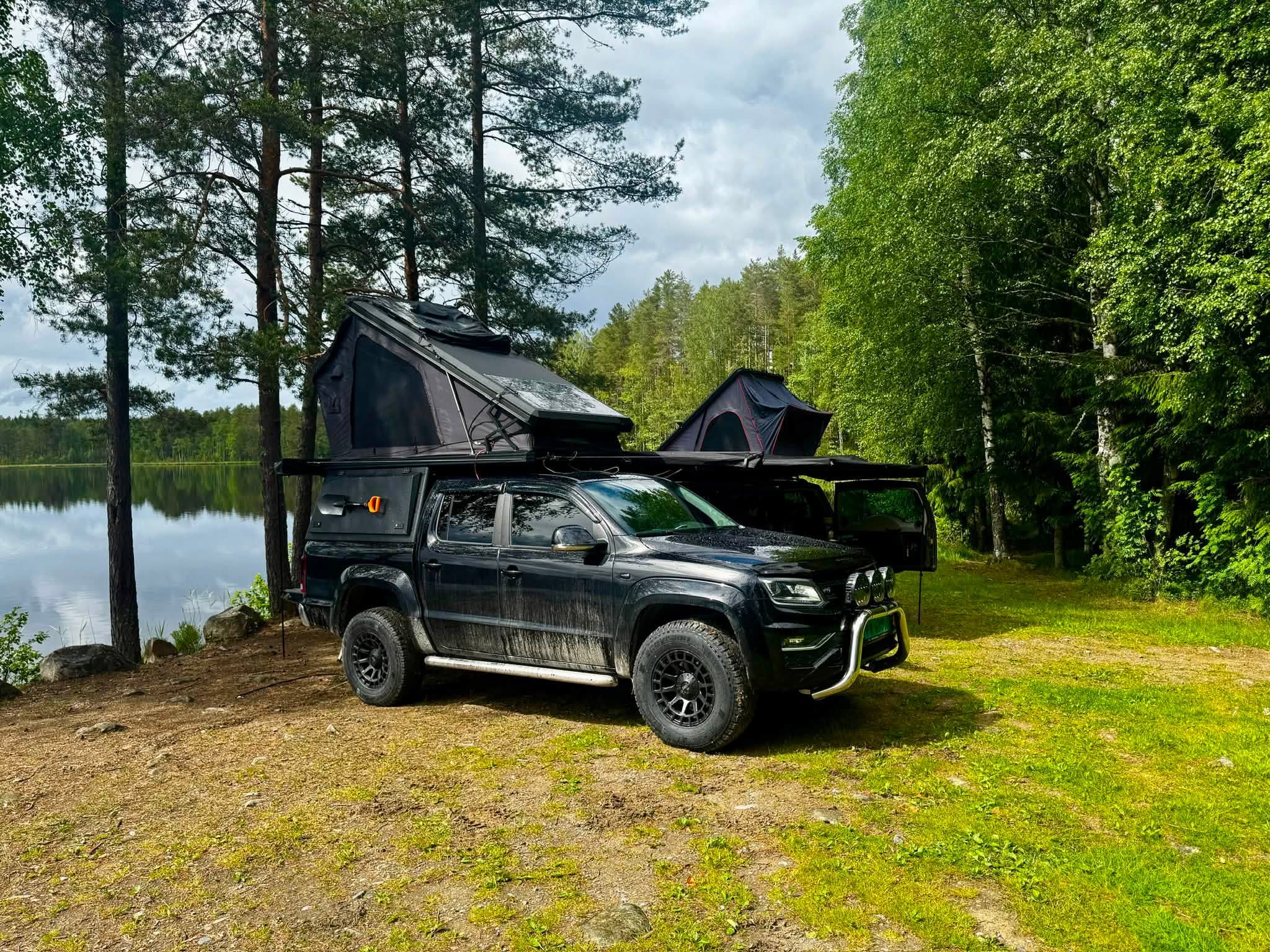
A truck camper is a combination of a house and a vehicle. To ensure a reasonable level of comfort, a truck camper comes with some commonly used appliances already installed after the build is complete. For example, my truck camper has a 102-liter fridge, a 24V variable-speed roof-mounted air conditioner, an 800-watt induction cooktop, an 18-inch folding TV, plus various indoor and outdoor lighting fixtures, exhaust fans, small water pumps, and other small appliances. Beyond these factory-installed appliances, we also brought along an electric cooking pot, an electric kettle, and other small household essentials, as well as a projector and speakers for outdoor entertainment.
You could say that while a truck camper is small, it has everything you need — the variety of appliances is very close to what you'd have at home, which ensures that no matter where we go, we can maintain relatively comfortable living conditions. However, while the types of appliances are similar to household ones, the models and specifications are different. Household appliances generally stay in one place with ample power supply, whereas truck camper appliances move with the vehicle, and since space and power are both limited on a truck camper, the appliances are typically redesigned or carefully selected — most often favoring smaller, more energy-efficient, and more durable models to better suit the truck camper environment.
I didn't install a washing machine in my truck camper. That big appliance uses a lot of water, a lot of power, and takes up a lot of space. After weighing it all, I realized that doing laundry only matters when you're traveling for extended periods. In the two-plus years we've used our truck camper, the longest we've continuously lived in it was about half a month — not that often — so the utilization rate of a washing machine would be low. I figured it wasn't necessary; for the occasional few times, hand-washing works just fine. Plus, the more you install, the higher the chance something breaks.
Although the appliances on a truck camper are redesigned or carefully selected to adapt to the mobile environment, the reality is that with all the bumping, complex road conditions, and insufficient testing, the failure rate and lifespan of truck camper appliances are still noticeably worse than household appliances. That's a big reason why many people say truck campers are troublesome — things break easily and there are always little issues. So personally, I think that as long as comfort is ensured, you should only install the appliances you truly need — it saves power, saves space, and saves headaches.
Electricity Usage
With so many appliances on a truck camper, people often ask how they're all powered — do you need to keep the engine running constantly? Running the engine nonstop is definitely not necessary. A truck camper typically has an independent house battery installed, and it's this standalone battery that stores the power and then supplies it to all the appliances. My truck camper has a 12-volt, 400-amp-hour house battery. A lot of people don't have a frame of reference for that, so here's an intuitive, easy-to-understand number: it can store roughly 5 kWh of electricity.
So is 5 kWh enough? You can't just discuss whether 5 kWh is enough in isolation — it involves two factors: usage and charging. If your charging rate is normally higher than your usage rate, then it's definitely enough. If your charging rate is lower than your usage rate, then it's not enough. We'll get to charging later; for now, let's talk about usage. Based on my two-plus years of real-world experience with this truck camper, it's been completely sufficient. I've never depleted the 5 kWh — even at the lowest point, I still had nearly 1 kWh left unused.
Ever since we started using a truck camper, we began paying attention to the consumption of various resources on board, especially water and electricity. We'd pay attention to the power consumption of each appliance, how much electricity it takes to cook a meal, how much water a shower uses, and so on — because resources on a truck camper are limited, after all. Over time, this gradually got our whole family into the habit of conserving resources. Experience tells me that a truck camper's daily electricity usage under normal use is roughly 2 kWh — and that's without counting the air conditioner. Aside from the AC, the biggest power draws are the fridge and cooking. Other daily usage is minimal — things like lighting, charging phones, and listening to music are basically negligible. Here are some rough numbers for reference: the fridge running for 24 hours uses about 1 kWh; cooking a one-hour hot pot meal uses about 0.5 kWh; watching a 90-minute movie uses about 0.1 kWh; boiling 500 ml of water uses about 0.05 kWh; and listening to music for 5 hours uses about 0.007 kWh.
The air conditioner is a special case — it's a major power consumer. However, the AC unit on my camper is relatively energy-efficient. In real-world testing during summer, running it for about 8 hours overnight only consumes a little over 1 kWh. This is probably because, for one thing, nighttime temperatures aren't that high, and for another, the camper's interior space is already quite small, and the AC is mounted directly above the bed — so when we sleep, we pull the curtains shut, and the cooling area is just the small space around the bed. But in the peak of summer, with outdoor temperatures in the mid-30s Celsius (around 95°F) and no shade, the AC can consume about 1 kWh per hour. So in summer, we try to park in shaded spots whenever possible to save power.
Power
A truck camper's power supply depends on its house battery and electrical circuit. The electrical system on a truck camper is typically 12V DC. While some of the camper's own built-in appliances — like the TV and fridge — run on 12V DC, most appliances, especially the ones we bring ourselves like electric cooking pots and kettles, require 120V AC. So truck campers are usually equipped with an inverter that converts 12V DC into 120V household AC to meet the power requirements of these appliances. The good news is that some campers come with pre-routed wiring channels built in, making it very convenient to add electrical circuits later.
The 12V voltage platform can safely handle a maximum reasonable load of about 3,000 watts, so most truck camper inverters are rated at 3,000 watts — mine is no exception. This means the combined wattage of appliances running simultaneously should not exceed 3,000 watts, which also means we need to pay extra attention to appliance power ratings when purchasing and using them.
Charging
If daily usage is 2 kWh, then doesn't 5 kWh mean it can't even last three days? So why did I say earlier that 5 kWh is completely sufficient for me? This is where we need to talk about recharging a truck camper. Taking my truck camper as an example, there are three ways to charge it.
The first is driving charge. Driving charge refers to the process of using the kinetic energy from the vehicle's engine while driving to charge the truck camper's house battery. Almost all of my truck camper's battery replenishment comes from driving charge, which shows just how important it is. As long as the vehicle is running, it continuously charges the house battery — so as long as the truck camper isn't sitting parked for two or three days without moving, there's basically no need to worry about running out of power. And we typically don't stay in one place for very long — we're driving almost every day — so as long as we're driving, we're charging. That's the main reason I've never been short on power.
The second is shore power. Shore power refers to connecting the truck camper through an external power inlet directly to grid power (typically 120V household current) to charge the camper's house battery. If you really do stay in one place for a long time, as long as you have normal household power or an EV charging station nearby, you can conveniently recharge the house battery through the external power inlet. But in the two-plus years I've used my truck camper, I've never actually charged it via shore power — driving charge has always been sufficient.
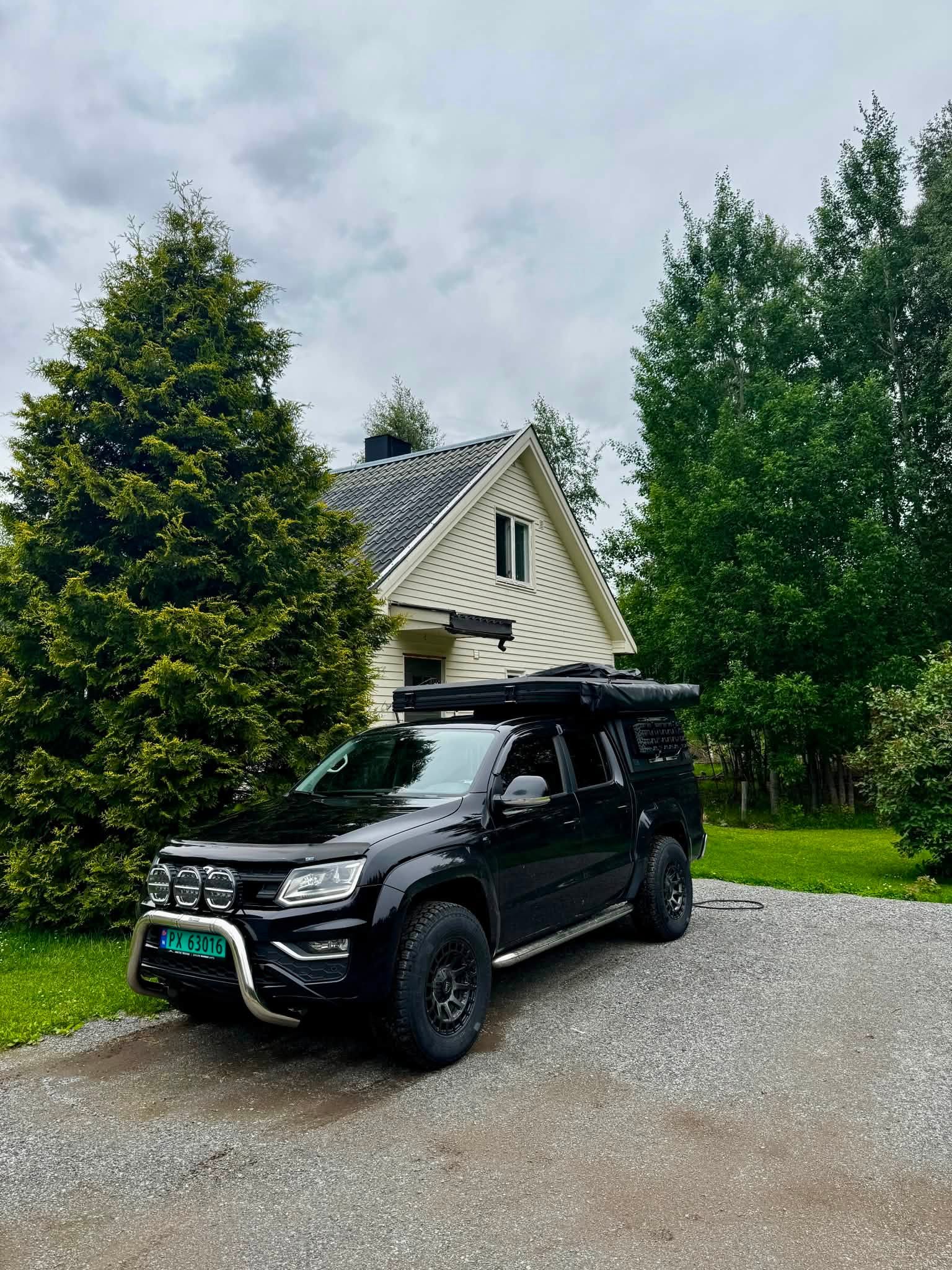
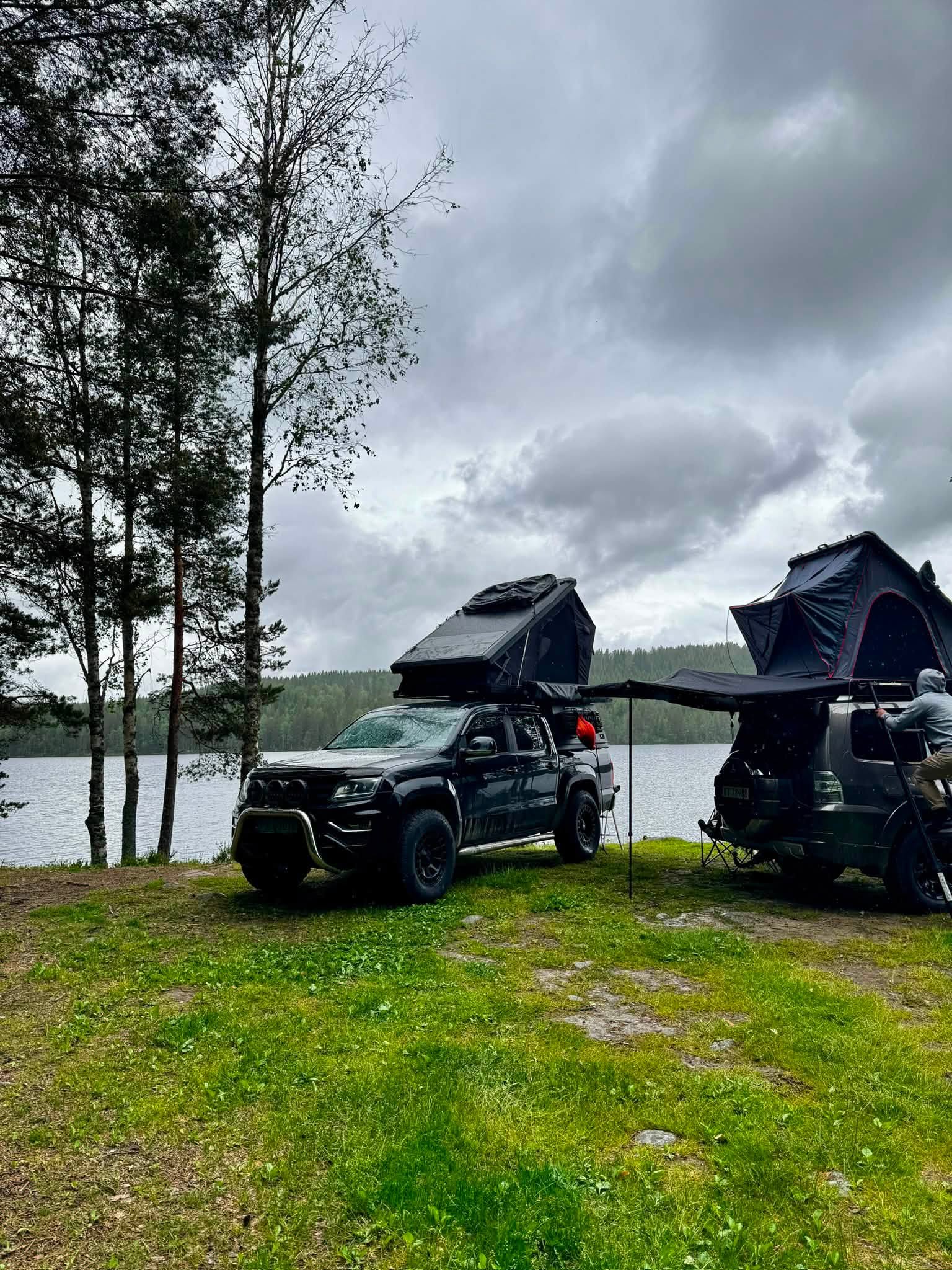
The third is solar power. Most people are familiar with this — it's photovoltaic generation. My roof has a single 175-watt solar panel installed, which converts solar energy into electricity stored in the battery. The efficiency of solar generation is directly related not only to sunlight but also to the surface area of the solar panel. Since my roof space is limited, I only have one 175-watt panel. I've never paid close attention to exactly how much electricity it produces, but it feels like it's better than nothing — it can probably handle small demands like phone charging and lighting. The entire camper weighs only 353 pounds — a lightweight design that means you can't really load up on too much. But that's exactly why it drives nimbly and gets great fuel economy. It's a trade-off in itself.


(1)_1.jpg)
_1.jpg)